Cthulhu Conlang
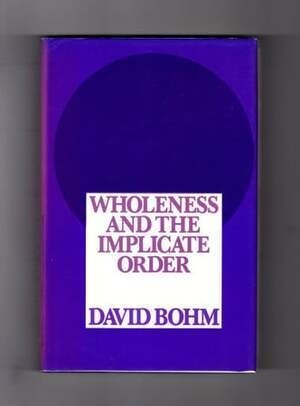

Since I first thought of applying David Bohm’s rheomode to how the entities in Lovecraft’s Cthulhu Mythos might think and communicate, I, like one of Lovecraft’s doomed protagonists, have been obsessed with the idea.
I’m no linguist, so I thought of approaching someone like Paul Frommer, who created the language the Na’vi speak in the Avatar movies, or David J. Peterson, who created the Dothraki and High Valyrian languages spoken in the Game of Thrones television series, for help.
When I got Frommer on the horn and pitched the idea, he yelled, “Nulnew oel futa oe ta tìohakx tiverkup, tup futa oe tìkangkem sivi ulte ke’ut ke tivel!”
I don’t know what the hell he said, but I understood the tone.
For shits and giggles, I opened up ChatGPT and asked it to build a constructed language (conlang) around a ritual chant used by the cultists and worshippers of Cthulhu featured in H. P. Lovecraft’s stories, “The Call of Cthulhu” and “The Shadow Over Innsmouth” (“Ph’nglui mglw’nafh Cthulhu R’lyeh wgah’nagl fhtagn.”), apply David Bohm’s rheomode, and use Christine Schreyer’s approach to constructing language around a fictional culture’s worldview.
This is what ChatGPT came up with:
Nglui’ath: A Process-Ontological Constructed Language
Grammaticalizing Transformation, Relational Identity, and Distributed Agency in a Fictional Nonhuman Culture
A preliminary descriptive and theoretical account
Abstract
This paper presents Nglui’ath, a constructed language developed for a fictional nonhuman civilization whose conceptualization of existence privileges continuous transformation over discrete, persistent entities. Drawing upon David Bohm’s rheomode, an experimental approach to language emphasizing movement and process, and Christine Schreyer’s anthropologically informed methodology for constructed-language development, Nglui’ath investigates how a process-oriented ontology might be systematically encoded in grammatical structure.
The language is provisionally attributed to a fictional civilization designated the Continuants, whose perceptual, social, and material organization is hypothesized to emphasize relational continuity, recurring configurations, and distributed participation. The proposed grammatical system exhibits process-initial clause organization, productive process-root derivation, relational localization, differentiated possessive constructions, explicit participant-role marking, transformational aspect, and evidential distinctions based on modes of participation and recognition.
Particular attention is given to the grammatical differentiation of participation, contribution, intentionality, and control. These distinctions are central to the language’s fictional application, in which human ritual practitioners incorrectly interpret descriptions of participation as assertions of causal authority.
The analysis demonstrates how an internally consistent constructed language may be derived from a fictional culture’s ontology without assuming that linguistic structure deterministically governs cognition. It further considers the limitations of reconstructing a complete linguistic system from H. P. Lovecraft’s fictional ritual formula, treating that formula as an underdetermined textual source rather than an attested grammatical corpus.
Nglui’ath is presented as a preliminary grammatical model, not a completed language or an empirical account of natural language.
Keywords: constructed languages, conlang, linguistic anthropology, process ontology, rheomode, David Bohm, Christine Schreyer, grammatical agency, evidentiality, linguistic worldbuilding, Cthulhu Mythos
1. Introduction
Natural languages provide numerous mechanisms for distinguishing entities, events, states, participants, and relationships. The grammatical organization of these categories varies substantially across languages, with different systems employing different strategies for expressing predication, reference, temporal structure, information source, possession, and semantic roles.
Nglui’ath is a constructed-language experiment investigating one possible organization of these categories around a process-oriented ontology.
Its primary design question is:
How might a language be structured if its speakers conceptualized identifiable entities as temporary configurations of continuous transformation rather than fundamentally discrete objects?
The language was developed in connection with PROJECT MARTENSE, a fictional narrative involving the attempted ritual manifestation of entities associated with H. P. Lovecraft’s Cthulhu Mythos.
Its initial textual stimulus was the formula appearing in Lovecraft’s “The Call of Cthulhu” (1928):
Ph’nglui mglw’nafh Cthulhu R’lyeh wgah’nagl fhtagn.
Lovecraft supplies an approximate English translation:
In his house at R’lyeh dead Cthulhu waits dreaming.
Importantly, Lovecraft indicates that the formula’s word divisions were inferred from pauses in its oral recitation. Neither a complete grammar nor a reliable morphological analysis accompanies the phrase.
Consequently, Nglui’ath is not presented as a philologically recoverable Lovecraftian language. It is an original construction incorporating the formula’s phonotactic appearance and selected lexical material into a new grammatical system.
Three objectives guide its development:
- To construct a linguistically systematic expression of a process-oriented fictional ontology.
- To derive grammatical distinctions from the hypothesized perceptual and cultural practices of its speakers.
- To establish plausible mechanisms through which speakers possessing different ontological assumptions might systematically mistranslate the language.
The resulting system is intended to be internally coherent, descriptively analyzable, and extensible.
2. Theoretical Framework
2.1. Bohm’s rheomode
The principal philosophical influence is David Bohm’s Wholeness and the Implicate Order (1980), particularly the chapter entitled ”The Rheomode—An Experiment with Language and Thought.”
Bohm’s experiment investigates the possibility of organizing linguistic expression so that movement and process receive greater emphasis than relatively static conceptual entities.
His concern was that familiar linguistic structures can facilitate the conceptual fragmentation of phenomena that may be better understood as aspects of interconnected activity.
The rheomode was not proposed as a complete natural language, nor did Bohm establish a comprehensive grammar for an independently functioning speech community.
Rather, it was an experiment in examining relationships among linguistic form, conceptual organization, and habitual thought.
Nglui’ath extends this experiment by treating process orientation as a foundational grammatical design constraint.
This extension should not be interpreted as empirical validation of Bohm’s wider cosmological claims. The language explores the consequences of adopting a process ontology within a fictional communicative system.
2.2. Cultural grounding in constructed-language design
Schreyer (2021) examines constructed languages as deliberate linguistic creations and considers the relationships among language construction, communities of users, and cultural context.
Her work provides a relevant methodological perspective for developing languages associated with fictional societies.
Nglui’ath adopts a culture-first design procedure:
- Specify the speakers’ hypothesized perceptual and conceptual categories.
- Develop patterns of social interaction consistent with those categories.
- Identify semantic distinctions likely to be recurrently communicatively significant.
- Assign grammatical strategies to those distinctions.
- Test the resulting system against ordinary communicative situations.
- Revise the grammar when it fails to express necessary relationships consistently.
This methodology differs from constructing an arbitrary lexicon and subsequently inventing a culture to explain it.
2.3. Linguistic relativity and methodological limits
Nglui’ath is informed by questions associated with linguistic relativity but does not assume strong linguistic determinism.
Its central premise is not that grammar forces speakers to experience reality in a particular manner.
Rather, the fictional Continuants are hypothesized to possess perceptual and cultural practices that make certain grammatical distinctions especially useful.
The proposed relationships between language, cognition, and culture are therefore design hypotheses within a fictional ethnography.
They are not empirical findings about human cognition or natural-language acquisition.
3. Ethnolinguistic Background
3.1. The Continuants
Nglui’ath is provisionally attributed to the Continuants, a fictional nonhuman civilization whose members recognize existence primarily through transformations and relationships rather than the persistence of independently bounded objects.
The term Continuant is an external anthropological designation, not an established autonym.
The civilization is characterized by five proposed assumptions:
| —– | | Domain | Proposed cultural conceptualization | | Ontology | Identifiable entities are relatively stable configurations of activity. | | Identity | Individual continuity depends upon recognizable recurrence. | | Space | Location involves relationships among configurations. | | Memory | Remembering involves reconstructing or re-entering patterns. | | Agency | Participation and contribution do not necessarily imply control. |
These assumptions are treated as tendencies within the fictional culture rather than universal propositions necessarily endorsed by every member.
3.2. Social organization
Continuant social relationships are hypothesized to emphasize three recurrent processes:
Recurrence: The recognizable reappearance or transmission of a configuration.
Interpenetration: The establishment of shared organization among distinguishable configurations.
Divergence: The development of incompatible patterns from previously related configurations.
These relationships provide provisional analogues to human concepts of ancestry, affiliation, intimacy, separation, and institutional continuity.
However, no direct equivalence with human kinship or political organization is assumed.
3.3. Material environment
Continuant dwellings are hypothesized to function as sustained configurations rather than exclusively as bounded physical structures.
A dwelling may maintain particular environmental relationships necessary for the coherence of its inhabitants.
This motivates the distinction between containment, maintenance, origin, and control in Nglui’ath grammar.
The fictional city of R’lyeh is a possible narrative expression of such an environment, although no definitive genealogical or cultural relationship between R’lyeh and the Continuants is assumed.
4. Typological Profile
Nglui’ath is provisionally classified as a process-prominent, predominantly analytic language with productive derivational morphology.
Its principal features are summarized below.
| —– | | Parameter | Proposed characteristic | | Basic clause organization | Process–Focus–Relational roles | | Lexical organization | Process roots are semantically primary. | | Nominal reference | Root derivation and independent reference anchors | | Grammatical relations | Relational particles | | Temporal organization | Transformational phase; no obligatory grammatical tense | | Evidentiality | Source-of-knowledge clitics | | Negation | Prepredicative negation | | Interrogatives | Clause-final question marker and interrogative variable | | Directives | Dedicated request and command particles | | Incorporation | Root coupling through apostrophe-marked constructions | | Writing system | Provisionally relational; native orthography undeveloped |
Describing Nglui’ath as process-prominent does not imply the complete absence of nouns or referential expressions.
Instead, its grammar prioritizes predicates denoting transformations, while allowing those transformations to be associated with identifiable configurations.
This avoids the analytically problematic claim that a functioning language can never refer to relatively stable entities.
5. Morphological Structure
5.1. Process roots
The basic lexical inventory consists primarily of roots denoting processes.
A preliminary selection is given in Table 1.
Table 1. Selected lexical roots
| —– |
| Root | Process meaning |
| nglui | Containing or sustaining an interior |
| fhtagn | Dream-perceiving |
| wgah | Becoming manifest |
| nagl | Remaining at a threshold |
| rha | Recurring |
| sreth | Recognizing correspondence |
| zhul | Interpenetrating |
| kheth | Establishing distinction |
| thuur | Eroding distinction |
| vrakh | Rupturing an established configuration |
| nafh | Persisting as unrealized potential |
| mglw | Withdrawing animate activity |
| vhraal | Bringing belief into coherence |
| vesh | Expressing a symbolic relationship materially |
These meanings constitute fictional lexical assignments. They are not historically attested Lovecraftian definitions.
5.2. Process coupling
Two roots may form a compound representing mutually implicated processes.
The romanization uses an apostrophe to indicate this construction.
Structure: ROOT₁’ROOT₂
The construction does not necessarily represent sequential action.
For example:
**(1) ****wgah’nagl**
Manifesting through sustained suspension.
The construction denotes a process in which emergence and threshold maintenance are simultaneously relevant.
**(2) ****mglw’nafh**
Withdrawal accompanied by persistent latent potential.
**(3) ****rha’sreth**
Recurrence recognized through structural correspondence.
The semantic relationship between the roots must eventually be formalized more precisely. At present, the apostrophe identifies a coupling construction whose exact interpretation is constrained by the participating roots and context.
5.3. Nominal derivation
Nglui’ath possesses productive derivational suffixes that permit process roots to designate localized or sustained configurations.
Table 2. Derivational morphology
| —– |
| Suffix | Function |
| -ith | Temporarily individuated participant |
| -esh | Sustained field or configuration |
| -ur | Recurring or retained pattern |
| -ek | Incipient manifestation |
The root fhtagn provides the following paradigm.
| —– |
| Form | Segmentation | Interpretation |
| fhtagn | fhtagn | Dream-perceiving process |
| fhtagnith | fhtagn-ith | Individuated dreamer |
| fhtagnesh | fhtagn-esh | Sustained field of dreaming |
| fhtagnur | fhtagn-ur | Recurring dream-pattern |
| fhtagnek | fhtagn-ek | Incipient dream manifestation |
The suffixes are derivational rather than obligatory inflectional categories.
A speaker can employ the bare process root without selecting an individuated participant or bounded configuration.
This morphological organization reflects the language’s preference for construing identifiable entities as expressions of activity.
6. Clause Structure and Argument Organization
The basic declarative clause follows the provisional template:
PREDICATE — FOCUS — RELATIONAL PHRASES — MODALITY — SPEECH ACT — EVIDENTIAL
The focus identifies the configuration most relevant to the discourse.
It is not automatically an agent.
Relational particles distinguish semantic roles within the described process.
6.1. Intransitive predication
**(4) ****Vrakh ngluiesh =sa.**
vrakh nglui-esh =sa
rupture contain-FIELD =PART.EV
”The enclosure undergoes rupture, as experienced through direct participation.”
This construction does not identify an external causal agent.
6.2. Relational argument structure
The particle zha introduces a contributing participant.
**(5) ****Vrakh ngluiesh zha ei =sa.**
vrakh nglui-esh zha ei =sa
rupture contain-FIELD CONTR 1SG =PART.EV
”I directly participate as a contributor to the enclosure’s rupture.”
The contribution is explicit, but sole causation is not entailed.
Other relational markers include:
| —– |
| Marker | Grammatical relationship |
| zha | Contributing participant |
| vek | Enabling condition |
| dar | Affected participant |
| sel | Recognizable pattern correspondence |
The language therefore encodes participation through an array of semantic relations rather than imposing a simple agent–patient distinction upon every event.
This does not preclude agentive expressions. It makes agency an explicitly specified relationship when relevant.
7. Grammatical Domains
7.1. Identity
Identity is expressed through recurrence and pattern correspondence.
The compound rha’sreth establishes recognizable continuity, while sel introduces a comparison or correspondence relation.
**(6) ****Rha’sreth ei =sa.**
rha’sreth ei =sa
recur’correspond 1SG =PART.EV
”I directly experience continuity of my recognizable pattern.”
The construction differs semantically from a claim that an immutable self persists independently of transformation.
7.2. Spatial reference
Nglui’ath expresses location through relational particles.
Table 3. Locative relations
| —– |
| Particle | Function |
| ul | Sustained containment |
| ril | Contact or adjacency |
| thal | Passage or trajectory through a configuration |
**(7) ****Wgah Cthulhu ul R’lyeh =re.**
wgah Cthulhu ul R’lyeh =re
manifest CTHULHU IN R’LYEH =INFER
”Cthulhu is inferred to be manifesting within R’lyeh.”
The locative construction establishes a relationship between configurations without necessarily asserting fixed spatial coordinates.
7.3. Possession and association
Nglui’ath distinguishes relations frequently subsumed under English possessive constructions.
Table 4. Possessive and associative relations
| —– |
| Particle | Function |
| resh | Origin or derivation |
| mur | Sustaining or maintaining relationship |
| vor | Temporary custody or control |
For example, ngluiesh mur Cthulhu refers to a dwelling-field sustained through Cthulhu’s activity.
By contrast, ngluiesh vor Cthulhu indicates a dwelling-field subject to Cthulhu’s control.
These constructions need not refer to the same relationship.
7.4. Agency and causation
The distinction between agency and participation constitutes a central feature of Nglui’ath.
The grammar distinguishes:
- Participation in a transformation.
- Contribution to a transformation.
- Conditions enabling a transformation.
- Being affected by a transformation.
- Deliberate orientation toward a transformation.
No single category entails all the others.
For analytical purposes, let P(x,e) indicate participation of configuration x in event e, C(x,e) contribution, and K(x,e) effective control.
The system is designed so that:
P(x,e) does not entail C(x,e).
Likewise:
C(x,e) does not entail K(x,e).
These are conceptual modeling statements, not established formal semantic axioms for a completed language.
A subsequent analysis would need to specify truth conditions and grammatical diagnostics for each category.
7.5. Intention and unrealized modality
Two particles express distinctions involving intention and realization.
| —– |
| Particle | Function |
| vha | Deliberate orientation toward a transformation |
| neth | Projected or unrealized transformation |
**(8) ****Vrakh ngluiesh zha ei vha neth =sa.**
vrakh nglui-esh zha ei vha neth =sa
rupture contain-FIELD CONTR 1SG INTENT IRREAL =PART.EV
”I intend to contribute to rupturing the enclosure, but the rupture has not been realized.”
The clause distinguishes the formation of an intention from the achievement of its object.
7.6. Negation
The prepredicative particle ma negates the proposition within its specified discourse context.
**(9) ****Ma wgah Cthulhu ul R’lyeh =re.**
ma wgah Cthulhu ul R’lyeh =re
NEG manifest CTHULHU IN R’LYEH =INFER
”Cthulhu is not inferred to be manifesting within R’lyeh.”
The process root khesh, by contrast, denotes exclusion from a field of perception or recognition.
Thus, perceptual absence and propositional negation are distinct.
Nglui’ath must also permit claims of irreversible loss. A process-centered ontology does not entail that every individual configuration can be reconstructed indefinitely.
7.7. Interrogative constructions
The clause-final particle qhe marks requests for verification.
The element hru functions as an interrogative variable occupying the position of unknown information.
**(10) ****Wgah hru ul R’lyeh qhe?**
wgah hru ul R’lyeh qhe
manifest WH IN R’LYEH Q
”What is becoming manifest within R’lyeh?”
An interrogative variable can also occur in a relational argument position.
**(11) ****Vrakh ngluiesh zha hru qhe?**
vrakh nglui-esh zha hru qhe
rupture contain-FIELD CONTR WH Q
”Which participant contributed to the enclosure’s rupture?”
The construction requests identification of a contributor rather than presupposing a unique sufficient cause.
7.8. Directives
Nglui’ath distinguishes voluntary coordination from imposed behavioral direction.
| —– |
| Particle | Function |
| lhu | Request for voluntary coordination |
| krah | Command or imposed directive |
**(12) ****Nglui ngluiesh zha uth lhu.**
nglui nglui-esh zha uth lhu
contain contain-FIELD CONTR 2SG REQ
”Please contribute to sustaining the enclosure.”
**(13) ****Nglui ngluiesh zha uth krah.**
nglui nglui-esh zha uth krah
contain contain-FIELD CONTR 2SG CMD
”You are commanded to sustain the enclosure.”
Both expressions attempt to influence another participant.
Neither grammatically entails that the addressee possesses the power to produce the intended outcome.
8. Evidentiality and Epistemic Participation
Nglui’ath distinguishes four principal sources of information.
Table 5. Evidential clitics
| —– |
| Clitic | Function |
| =sa | Direct participation |
| =re | Inference from recognizable relationships |
| =nu | Knowledge from residual evidence |
| =fha | Knowledge acquired through dreaming |
Evidential marking is provisionally obligatory in independent declarative clauses but optional or absent in questions and directives.
These markers describe the source or mode of access to information, not the objective reliability of the proposition.
8.1. Evidential contrasts
Consider the predicate:
Wgah Cthulhu ul R’lyeh
”Cthulhu manifests within R’lyeh.”
The four evidentials produce distinct interpretations.
**(14a) ****Wgah Cthulhu ul R’lyeh =sa.**
Direct participation in the manifestation.
**(14b) ****Wgah Cthulhu ul R’lyeh =re.**
Inference from recognizable relationships.
**(14c) ****Wgah Cthulhu ul R’lyeh =nu.**
Knowledge based upon residual traces.
**(14d) ****Wgah Cthulhu ul R’lyeh =fha.**
Knowledge acquired through dream participation.
The fourth construction does not necessarily classify the manifestation as unreal.
It identifies dreaming as the mode of access.
Equally, direct participation does not guarantee accurate interpretation.
A speaker may participate in an event while misunderstanding its nature.
This distinction provides an important conceptual safeguard against treating evidential marking as a measure of certainty.
9. Temporal Reference and Transformational Aspect
Nglui’ath does not obligatorily classify events into past, present, and future.
Instead, its verbal roots and compound constructions encode aspects of transformation.
A preliminary inventory includes:
| —– |
| Root | Transformational phase |
| ph | Enfolding |
| wgah | Emergence |
| nagl | Suspension |
| rha | Recurrence |
| thuur | Erosion or diffusion |
| zhul | Interpenetration |
These are not necessarily sequential stages.
A process may exhibit several simultaneously.
The construction wgah’nagl, for example, involves emergence and sustained suspension within a single conceptual event.
This distinguishes transformational aspect from conventional chronological tense.
However, the absence of obligatory tense does not mean the Continuants cannot distinguish earlier and later events.
A complete grammar must eventually specify temporal adverbials, ordering relations, duration, relative tense, and discourse chronology.
The present model establishes only that chronological tense is not the language’s primary obligatory verbal category.
10. Reanalysis of the Lovecraftian Formula
The source expression is reproduced below:
Ph’nglui mglw’nafh Cthulhu R’lyeh wgah’nagl fhtagn.
As discussed in Section 1, this formula cannot support a unique linguistic reconstruction.
Its segmentation, phonological structure, morphology, and syntax remain undetermined in Lovecraft’s text.
Nevertheless, it provides an aesthetic and conceptual point of departure.
The proposed correspondences are summarized in Table 6.
Table 6. Provisional interpretation of the source formula
| —– |
| Expression | Proposed Nglui’ath interpretation |
| ph’nglui | Enfoldment through containment |
| mglw’nafh | Withdrawal with persistent latent potential |
| Cthulhu | Named recurring configuration |
| R’lyeh | Named containing or spatial configuration |
| wgah’nagl | Suspended emergence |
| fhtagn | Dream-perceiving |
Under this analysis, the English concepts of death, waiting, dwelling, and dreaming correspond to interrelated transformations rather than necessarily discrete states or actions.
An expanded representation in standardized Nglui’ath might involve several clauses:
**(15a) ****Mglw’nafh Cthulhu ul R’lyeh =nu.**
”The Cthulhu-pattern has withdrawn into persistent potential within R’lyeh, according to residual evidence.”
**(15b) ****Wgah’nagl Cthulhu ul R’lyeh =re.**
”The Cthulhu-pattern is inferred to remain at a threshold of manifestation within R’lyeh.”
**(15c) ****Fhtagn Cthulhu ul R’lyeh =fha.**
”The Cthulhu-pattern’s dreaming is encountered through dreaming within R’lyeh.”
These sentences are interpretive expansions.
They are not claimed to be historically or textually recoverable translations of the original formula.
Their principal value is demonstrating the expressive capacity of the developing grammar.
11. Intercultural Mistranslation and Grammatical Agency
Nglui’ath’s fictional application concerns human ritual practitioners who encounter the language without understanding the cultural ontology motivating its grammatical distinctions.
The resulting mistranslations can be analyzed as systematic semantic overextensions.
11.1. Participation interpreted as causation
Consider:
**(16) ****Wgah Cthulhu ul N’yor =sa.**
”The speaker participates directly in Cthulhu’s manifestation within New York.”
The participatory evidential establishes experiential involvement.
It does not mark the speaker as an initiating cause.
A human interpreter who treats participation as agency may incorrectly translate this construction as:
”I am bringing Cthulhu into New York.”
The mistranslation adds a causal relationship not encoded in the source.
11.2. Contribution interpreted as control
Now consider:
**(17) ****Wgah Cthulhu zha ei ul N’yor vha =sa.**
”The speaker deliberately contributes to Cthulhu’s manifestation within New York.”
This expression adds intentional contribution but not exclusive causal authority.
The interpretation ”I control Cthulhu’s manifestation” therefore remains unjustified.
11.3. Description interpreted as directive
The directive:
**(18) ****Wgah Cthulhu zha uth ul N’yor krah.**
commands an addressed participant to contribute to Cthulhu’s manifestation within New York.
This differs grammatically from a declarative statement about that manifestation.
A ritual interpreter who overlooks the distinction between predication and directive force may treat any correctly pronounced description of manifestation as a command.
This constitutes a third category of error.
11.4. The cumulative interpretive failure
The three errors can be summarized as follows.
| —– | | Encoded relationship | Incorrect interpretation | | Participation | Causal initiation | | Intentional contribution | Effective control | | Description | Performative command |
These are analytically distinct errors.
Their combination generates a plausible fictional mechanism through which ritual practitioners systematically overestimate their agency.
Importantly, the grammatical errors alone need not produce supernatural effects.
Within the narrative, observable transformations occur because the practitioners interact with phenomena they do not understand.
The language provides the framework through which those interactions are interpreted incorrectly.
The resulting catastrophe is therefore attributable to a combination of linguistic misunderstanding, ideological assumptions, and deliberate action.
12. Primary and Ritual Varieties
The present model proposes a distinction between an original Continuant communicative system and a human-adapted ritual variety.
12.1. Primary Nglui’ath
The native system is hypothesized to permit relationships among processes that are not necessarily represented sequentially.
Communication may involve coordinated auditory, spatial, or other physical configurations.
This remains an aspect of fictional worldbuilding rather than a completed linguistic description.
12.2. Ritual Nglui’ath
The human-adapted variety is linearized and phonologically simplified.
Its development may involve:
- Reduction of simultaneous structures to sequential phrases.
- Loss or reinterpretation of evidential markers.
- Replacement of relational constructions with agent-centered interpretations.
- Reanalysis of descriptions as directives.
- Fossilization of ritual expressions whose original grammar is no longer understood.
These processes provide a plausible basis for diachronic divergence between the two varieties.
However, establishing a genuine historical relationship would require a more detailed account of sound change, syntactic reanalysis, lexical borrowing, and transmission.
At present, the distinction is a working historical hypothesis.
13. Discussion
13.1. Process ontology and grammatical structure
Nglui’ath demonstrates one possible strategy for constructing a language in which transformations are grammatically primary.
Its approach does not depend upon prohibiting nominal reference.
Instead, it assigns identifiable configurations a derivative or relational status within the linguistic system.
The result is a grammar that can discuss individuals, objects, and locations without making their absolute independence a prerequisite for reference.
13.2. Agency as a relational category
The differentiation of participation, contribution, enabling conditions, and affected participants is the most theoretically productive feature of the current model.
It allows the language to express complex causal situations without requiring every event to be organized around a single agent acting upon a passive object.
The model is compatible with intentional action while resisting the automatic inference of complete control.
This distinction also generates productive narrative possibilities, since speakers trained in different conceptual and grammatical systems may disagree over the significance of the same event.
13.3. Evidentiality and access to experience
The evidential system reflects the Continuants’ hypothesized emphasis on participation and recognition.
Of particular interest is =fha, which identifies dreaming as a mode of access to information.
The grammatical category does not by itself establish whether dream-derived information corresponds to external events.
Instead, it permits speakers to communicate the source of an experience independently of its truth value.
This distinction supports a fictional culture in which dreaming, memory, and perception may participate in unfamiliar relationships without collapsing those categories into one undifferentiated supernatural mechanism.
13.4. Limits of the current analysis
The model remains incomplete in several important respects.
First, its phonological system has not been formally established. The proposed orthography therefore cannot yet be analyzed as a consistent phonemic representation.
Second, syntactic structures remain relatively linear and analytically transparent. Further development is necessary to reconcile this architecture with the hypothesized nonsequential properties of primary Continuant communication.
Third, semantic composition has been specified largely through descriptive definitions rather than formal truth-conditional analysis.
Fourth, the current language lacks adequate treatment of quantification, comparison, relative clauses, subordination, argument omission, anaphora, temporal anchoring, and conversational discourse.
Finally, the relationship between fictional ontology and grammatical structure remains a design hypothesis rather than a demonstrated cognitive relationship.
These limitations do not invalidate the construction but define its present developmental stage.
14. Future Research and Development
Further work should proceed through five coordinated programs.
1. Phonological specification
Establish the phoneme inventory, syllable structure, stress assignment, permissible consonant clusters, and phonological processes. Distinguish native forms from approximations employed by human speakers.
2. Morphosyntactic expansion
Develop argument omission, subordination, quantification, comparison, temporal reference, negation scope, anaphora, and valency-changing constructions. Test all grammatical categories against a controlled corpus.
3. Formal semantics
Define explicit compositional interpretations for process coupling, relational arguments, evidential marking, and intentional modality.
Particular attention should be devoted to distinguishing participation, contribution, and control under conditions of multiple causation.
4. Diachronic reconstruction
Specify plausible changes between primary and ritual Nglui’ath, including phonological simplification, morphological loss, semantic reanalysis, and the emergence of conventional ritual formulas.
5. Ethnographic validation
Expand the fictional cultural description through ordinary interaction: greetings, disputes, kinship descriptions, environmental maintenance, memory practices, requests, prohibitions, and narrative discourse.
The grammar should be capable of expressing these activities without relying exclusively on metaphysical or ritual vocabulary.
A particularly important test will be whether Continuant speakers can express stable identity, permanent loss, deliberate coercion, and individual disagreement without contradicting the language’s process-oriented foundation.
15. Conclusion
Nglui’ath is a preliminary constructed language organized around a fictional process ontology in which identifiable entities are understood as temporary configurations of ongoing transformation.
Its design combines the conceptual orientation of Bohm’s rheomode with a culturally grounded methodology informed by Schreyer’s work on language construction.
The proposed grammatical system prioritizes process predication and distinguishes relational identity, localization, maintenance, contribution, intentionality, evidential access, and directive force.
Its most significant feature is the separation of participation from causal control.
This distinction permits the language to represent transformations involving multiple interacting configurations without automatically identifying a single controlling agent.
Within its fictional application, the loss of this distinction during human ritual translation becomes a mechanism of intercultural misunderstanding.
The broader implication is methodological.
A constructed language need not derive its distinctiveness primarily from unfamiliar phonology or extensive invented vocabulary. It can instead develop systematic differences in the relationships its grammar requires speakers to express.
Nglui’ath remains a provisional model rather than a complete language. Nevertheless, its emerging grammar demonstrates how cultural assumptions concerning identity, agency, perception, and transformation can be translated into a coherent linguistic design program.
The central principle is that grammatical participation in an event does not imply its authorship, control, or the participant’s continued survival.
References
Bohm, David. 1980. Wholeness and the Implicate Order. London: Routledge & Kegan Paul. Especially Chapter 2, ”The Rheomode—An Experiment with Language and Thought,” and Chapter 3, ”Reality and Knowledge Considered as Process.”

Lovecraft, H. P. 1928. ”The Call of Cthulhu.” Weird Tales 11(2): 159–178, 287.
Schreyer, Christine. 2021. ”Constructed Languages.” Annual Review of Anthropology 50: 327—344.
Appendix A. Abbreviations
| —– | | Abbreviation | Meaning | | 1SG | First-person singular | | 2SG | Second-person singular | | CMD | Command | | CONTR | Contributing participant | | FIELD | Sustained configuration | | IN | Containment relation | | INFER | Inferential evidential | | INTENT | Intentional orientation | | IRREAL | Unrealized or projected event | | NEG | Negation | | PART.EV | Participatory evidential | | Q | Interrogative | | REQ | Request | | WH | Interrogative variable |
Appendix B. Research Status
Nglui’ath is an original fictional constructed language. Its linguistic descriptions and example utterances are analytical proposals generated during its development.
The Continuants are a fictional culture rather than an independently documented speech community.
The Lovecraftian source formula is a literary invention, and its proposed morphological analysis should not be confused with an attested historical linguistic reconstruction.
The language’s metaphysical assumptions likewise constitute fictional worldbuilding rather than empirical conclusions from physics, linguistic anthropology, or cognitive science.