The Blind Idiot God Is in My Shopping Cart
I am presently immersed in the deeper and more obscure researches attendant upon Project Martense. My notebook is chock-full of disparate ideas, but I’ve been doing this long enough to know things will start clicking into place. One idea that’s lodged itself into my grey matter is the possibility of rendering the repulsive seductive. Whether this curious aesthetic perversion shall ultimately find expression in my forthcoming tale of the arcane, I cannot presently say. But should it fail to secure a place therein, I have little doubt that it will insinuate itself into some later and perhaps still more questionable undertaking.
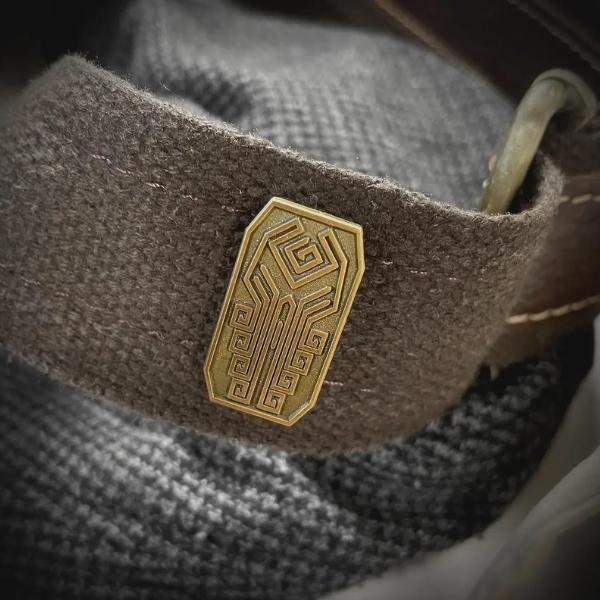
I’ve been perusing Etsy for Lovecraft-related merchandise and came across some wonderful stuff. Take this brass pin of Cthulhu, for example. There is something almost perversely elegant about the little emblem. I might readily wear it to my place of employment, where my unsuspecting associates would admire its curious workmanship, never suspecting the blasphemous cosmic implications concealed within its polished contours. I’ve added it to my shopping cart, where it lies like the dread, sleeping god itself.
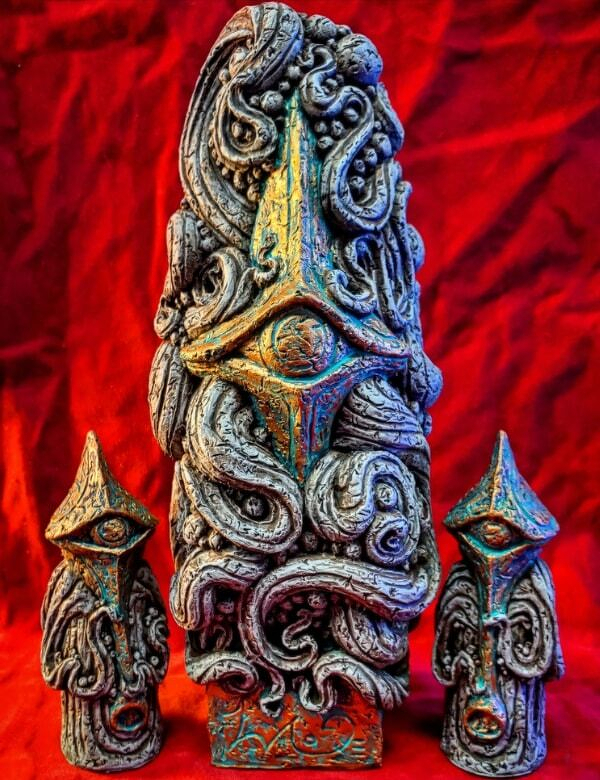
Cthulhu is Lovecraft’s most recognizable creature from his weird fiction. Hell, there are adorable plushies of the tentacled Great Old One! But Azathoth, the blind idiot god, is the real shit. I can’t help but feel that having a statue of the Daemon-Sultan on my nightstand would inspire me, if not dragging me one step closer to gibbering insanity. The only thing saving me from certain doom is that this artifact is sculpted from resin, which I cannot abide. I prefer something more substantial to capture the likeness of the Lord of All Things. Bronze, perhaps.
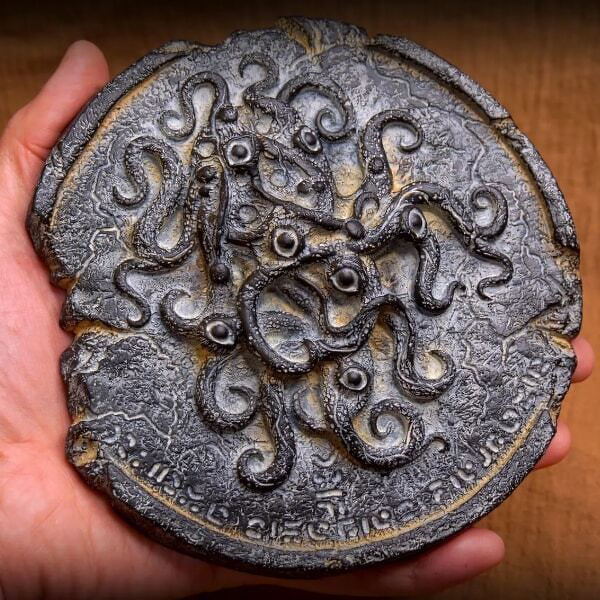
Take this wall relief plaque of the formless protoplasm of a Shoggoth, for example. It’s cast in solid stone-like statuary-grade gypsum cement. It looks like it has heft. And while I suspect it would shatter into a million pieces if I dropped it, I find it more desirable than some 3D-printed trinket.
Whether any of these eldritch objects shall ultimately pass into my possession remains a question for another hour. I have, for the present, more urgent and sinister matters to occupy my faculties.
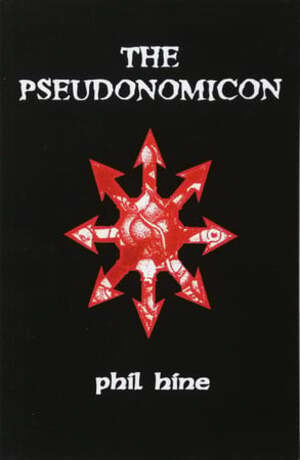
The researches of Project Martense beckon anew, and I must return to the study of Phil Hine’s The Pseudonomicon in hopes of dark revelation. As Hine himself opines, “Gods do not, generally, have a lot to say, but what they do say, is worth listening to.”
I cannot help but wonder whether the greater peril lies in hearing such utterances, or in discovering, at some unguarded moment, that one has begun to understand them.